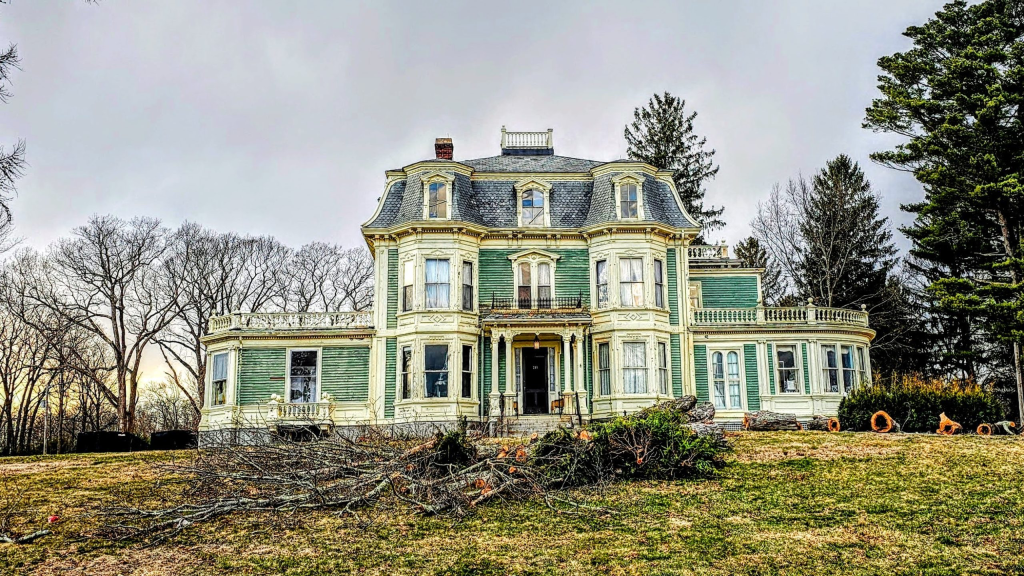
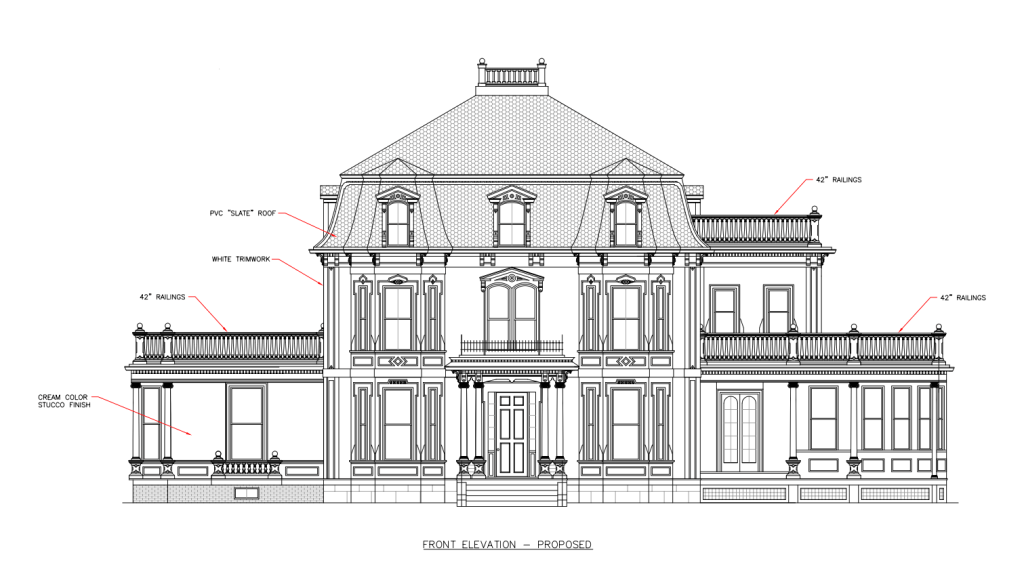
Oak View Mansion is probably one of the most recognizable historic houses in Norwood. If you’ve ever driven down Walpole Street, you’ve probably seen it sitting back from the road behind its expansive lawn.
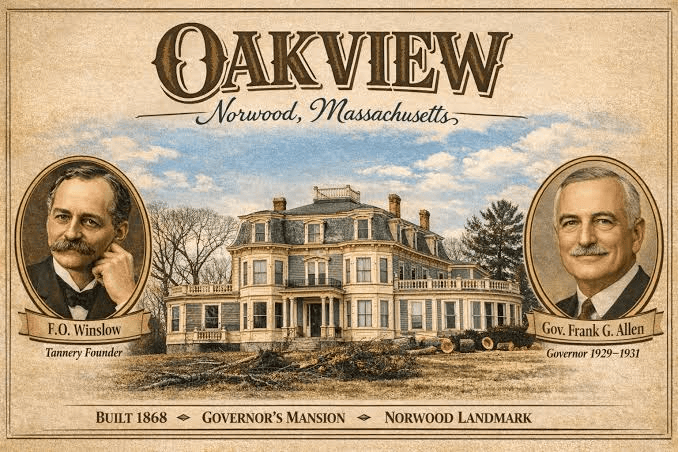
There is already quite a bit written about Oak View. Its connection to the Winslow tanning fortune, its Second Empire architecture, Governor Frank Allen, and the many famous people who passed through its doors have all been documented.
But when I started looking into the property myself, I became more interested in something a little less glamorous: the deeds.
When was the house actually built? Who owned the land before the mansion appeared? And how did Oak view make its way from the Winslow family to Frank Allen?
Before Oak View
The story of Oak View begins before the house itself.
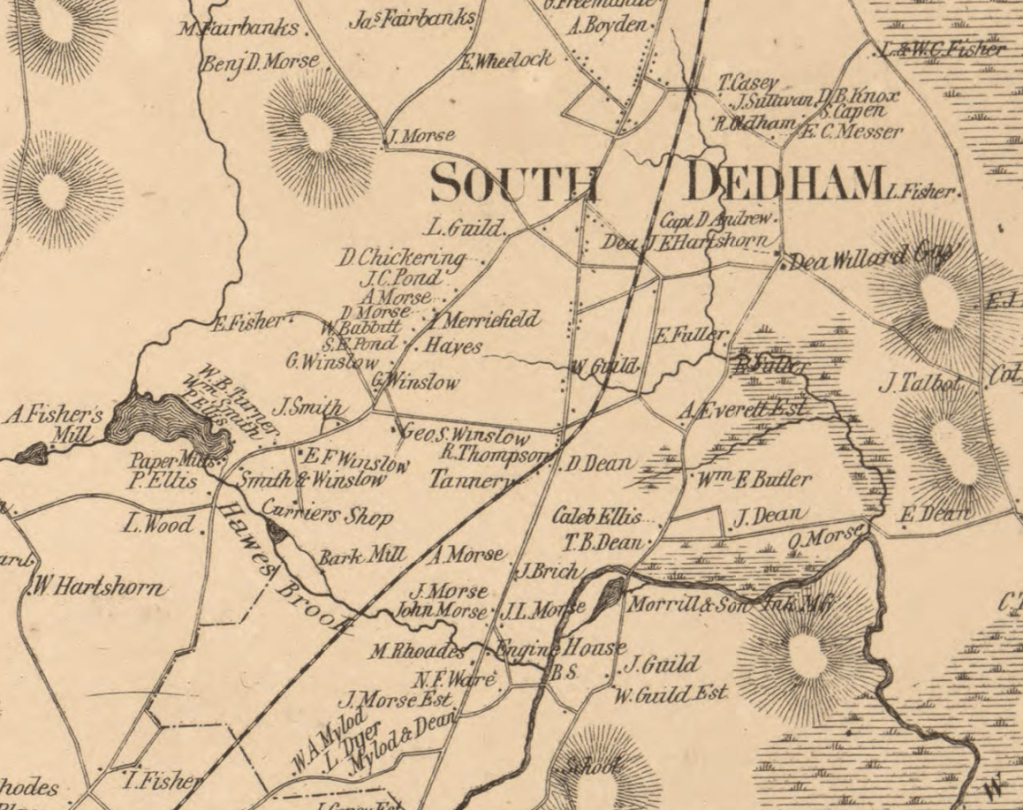
According to the Norwood Historical Society, Francis O. Winslow built the house in 1868. At the time, what is now Norwood was still part of Dedham. Norwood would not become its own town until 1872.
That means Oak View was already standing when Norwood officially became a town.
The 1868 construction date also gives us an important starting point for understanding the property. Rather than beginning with a twentieth-century real estate listing or a later description of the mansion, we can work backward and ask what happened to the land before Francis Winslow built his home there.
289 Walpole Street
Francis O. Winslow conveyed the property to Frank G. Allen for the nominal consideration of one dollar.
Eleanor W. Allen sold the property to the Missionary Servants of the Most Blessed Trinity, Inc. for $18,250, a substantial transaction marking the property’s transition from private family hands into institutional religious ownership.
The Missionary Servants of the Most Blessed Trinity, Inc. conveyed the property on December 26, 1951. The consideration and receiving party for this transfer remain to be confirmed from the registry record.
The Missionary Servants of the Most Blessed Trinity, Inc. sold the property for $100,000
Robert J. Pegurri and Barbara J. Rand sold the property to Invest LLC for $1.4 million, a significant valuation reflecting nearly a century of the property’s history coming to rest in corporate hands.
Following the Property Through the Registry
Historic houses are often introduced through their architecture or the prominent families who lived in them. Deeds tell a different kind of story.
They are not particularly glamorous documents. They contain legal descriptions, names, dates, signatures, and the language of property transactions. But together, they create a paper trail that allows us to follow a property through time.
For Oak View, that paper trail connects the house to the Winslow family and eventually to Frank G. Allen.
The deed records show that Francis O. Winslow conveyed the property to Allen in 1925.
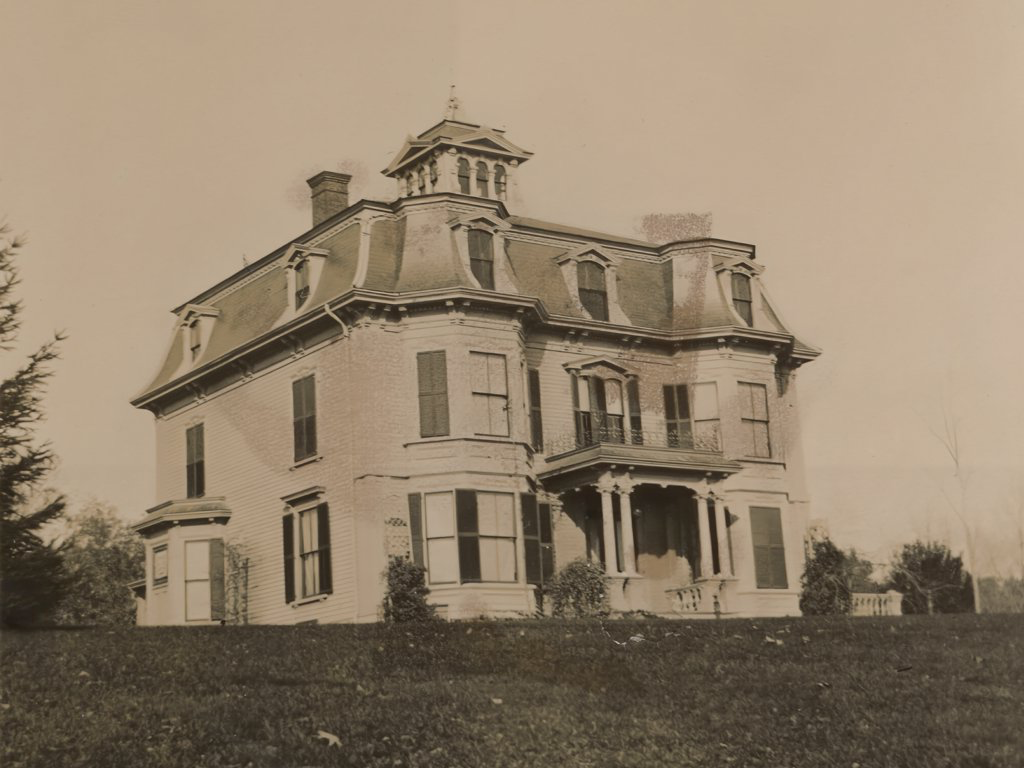
By that point, Oak View had been standing for nearly sixty years. The house had witnessed the transformation of the area from part of Dedham into the independent town of Norwood, while the property itself remained associated with the Winslow family.
The 1925 transaction therefore represents an important turning point in the history of the house.
From Winslow to Allen
The transfer to Frank G. Allen is particularly interesting.
Francis O. Winslow conveyed the property to Frank G. Allen in 1925 for just $1. The price immediately stands out, especially for a property as substantial as Oak View. The Norwood Historical Society identifies Allen as Winslow’s son-in-law, having married Winslow’s daughter, Clara Henrietta Winslow, in 1897. That family connection provides some context for the transfer, but the Historical Society does not explain why the property was conveyed for a nominal $1.
Seeing the deed and the family relationship together made me wonder what was happening behind the transaction. Was the $1 simply a nominal consideration between family members? Was the transfer connected to Francis’s estate or another private arrangement? The deed documents the transaction, but it does not necessarily tell us the entire story behind it.
That distinction is important when researching historic properties. It is easy to look at a sequence of documents and create a story that seems to make sense. But the records don’t always give us enough information to prove the reasoning behind a transaction.
For now, the 1925 deed stands as an important piece of evidence in Oak View’s story.
Thank you for reading!
Sources:
Norfolk County Registry of Deeds. Deed Records for Oak View Mansion, Norwood, Massachusetts. Various dates and volumes.
Norwood Historical Society. “From Gilded Age Roots to Modern Restoration: The Story of Oakview Mansion.” Norwood Historical Society, 26 March 2025.
Norwood Historical Society. “Frank O. Winslow, Dead at 81—This Day in Norwood History—January 22, 1926.” Norwood Historical Society.
Norwood Historical Society. “The Winslow School and Beyond.” Norwood Historical Society, 30 January 2023.
Norwood Historical Society. “A Walk Around the Park: Walking Tour of the Old Winslow Neighborhood.” Norwood Historical Society, 2023.
Willett, George F., and Frank B. Tolles. Norwood—A Centennial History.

 Echoes of a Home
Leave a comment